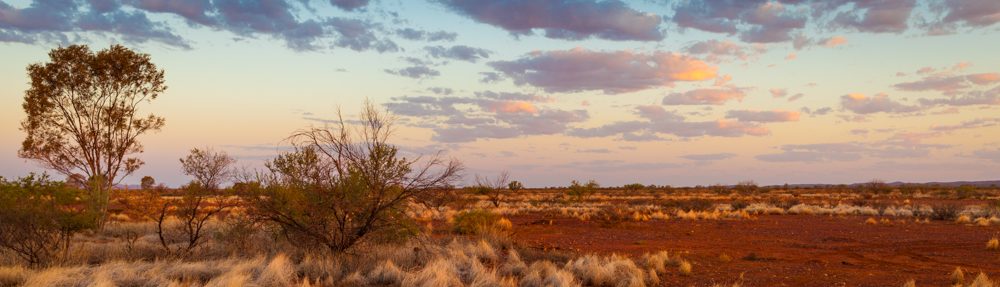
The greatest expanse of cool temperate rainforest in Australia and the second largest in the world, the Tarkine is a massive wilderness region covering much of the northwest of Tasmania.
Wet and Wild
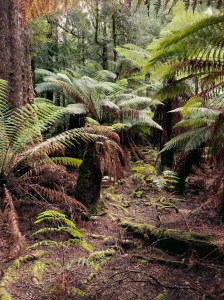
Walking through the rainforest on a damp, showery day is like walking back in time through some mythical ancient forest. And it is with good reason, the Tarkine is a rare remnant of Gondwana, a true and ancient wilderness. It is a land of tree ferns, lichens, mosses, fungi, rare and ancient trees and abundant wildlife including the endangered Tasmanian Devil.
Our visit followed the Tarkine Drive, which takes a circular route through the northwest of the region. Largely black-top ‘C’ grade roads but giving way to gravel tracks to visit many of the highlights. All are passable in sturdy two and four-wheel drive vehicles but there are numerous potholes to navigate.
Trowutta Arch State Reserve
Our first stop was at Trowutta Arch State Reserve and what an amazing walk this was with an unexpected and startling view of the arch. The relatively* easy 30-minute return walk takes you among giant Myrtle Beech trees as well as Leatherwood, Sassafras and Celery-topped pine trees, while in the undergrowth tree ferns, native laurel, brackens, fungi, bright green mosses and algae create a dense forest floor.
Every now and then we spotted what appeared to be white leaves laying on the forest floor and were puzzled where they came from. We later discovered, thanks to a very knowledgeable Park Ranger, that they were flower petals from the famous Leatherwood tree. And it is a tree full of surprises. Very slow growing and only 10-20 metres tall, the Leatherwood tree doesn’t flower until it is at least 70-years old and doesn’t reach it’s peak until 120-200 years of age. Leatherwood is the most common form of honey in Tasmania and accounting for nearly 75% of production. It has a strong and intense floral taste and is easily recognisable among other native honeys. Not surprisingly the Tarkine is one of the major regions beehives are placed during the flowering season between spring and summer. We were lucky to still find Leatherwoods flowering in early autumn.
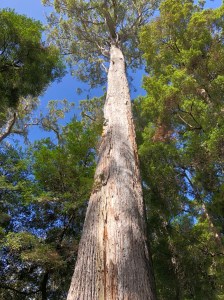
It’s impossible to walk past one of the Myrtle Beech trees without straining your neck and gazing upwards to the crown. They are absolutely straight and void of limbs until reaching the canopy tens of metres above the forest floor. It’s easy to see why loggers were keen to exploit these ancient trees. Thankfully now we are more concerned about the environment and majestic trees such as these are left to grow old gracefully. However, that may not always be the case.
A valuable resource
Unbelievably the Tarkine is not adequately protected with the Tasmanian government seeing this region as a resource to be exploited for timber production and mining. That is despite expert recommendations, commissioned by the government, that it should be protected from any further development. The only way to guarantee this wilderness is preserved for future generations, and for the sake of the wildlife that live there, is to get the whole area under World Heritage listing status. This is a growing, and angry, voice campaigning to protect the Tarkine. Let us hope they succeed.
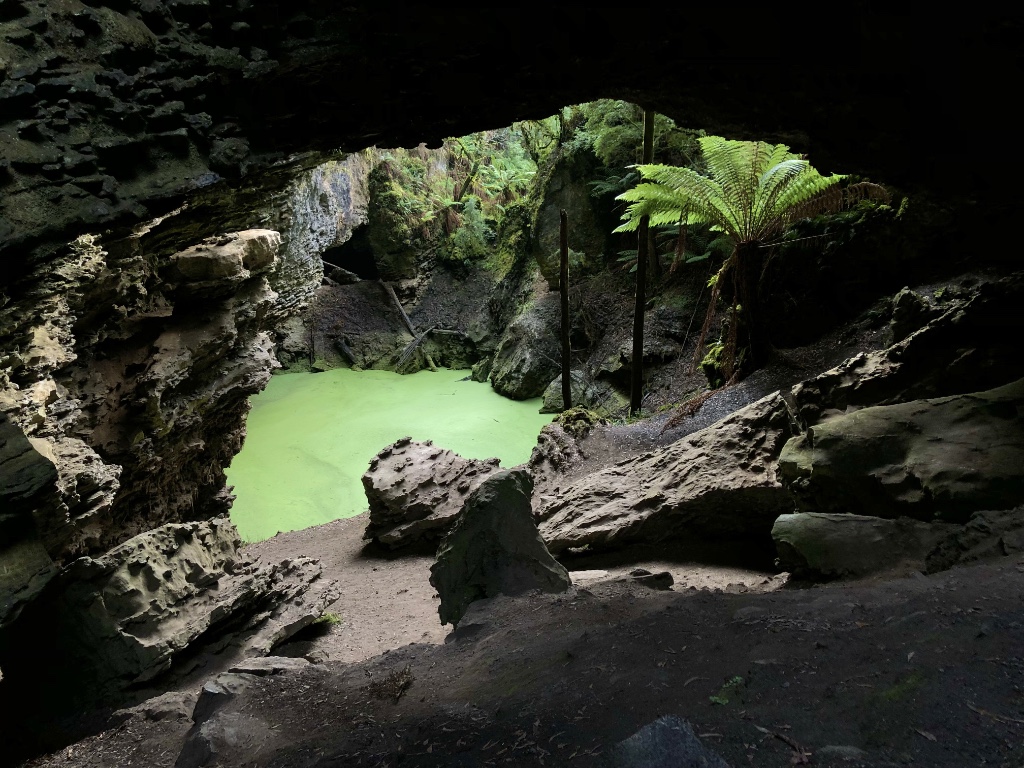
No assuming you haven’t tripped over one of the many tree roots or falling backwards trying to see the top of the Myrtle trees, you will soon, and suddenly, come across a dark, gloomy hole in a cliff face. But right in the middle is a large, luminous green soup of algae surrounded by fallen rocks and tree ferns. It is spectacular, otherworldly even. I try not to look at the photos in guide books – it spoils the surprise, but I could not even begin to imagine this scene. It has been the highlight of our trip to Tasmania… so far.
Morons
Sadly there are those who enjoy such beautiful scenery as this that they feel a desperate urge to deface it with graffiti or scrape their name into the rock. Here it is more evident than any landmark we have seen in all our travels around Australia. Why do such mindless morons do this? Not only is this action illegal, no one but themselves are the slightest bit interested in seeing someone else’s name. Maybe they should remember that they can easily be traced – they gave their details when buying a Parks Pass after all – duh! … assuming they bought one.
Watch out – a Sinkhole!
Much of the region lays on top of a limestone plateau from aeons past when the Tarkine was underwater. Common to many areas around the south of Australia, acidic erosion creates underground caverns and often these collapse over thousands of years to form sinkholes. The Tarkine is not a immune to this form of erosion and many sinkholes have formed. Some are just shallow depressions but several have filled with water supporting a wide range of aquatic life. One such sinkhole sits right beside the road between Rapid River and the Milkshake Hills. Drive to fast and you’ll miss it. It’s well worth stopping to take a look but don’t step too close to the water – the ground is very soft.
Julius River
From the car park there are two walks, the shorter being just a 20-minute circular route beside the Julius River. This path begins on an excellent raised walkway with viewing platforms as you follow the river before dropping to a bush walk. Here you may see Platypus if you’re lucky.
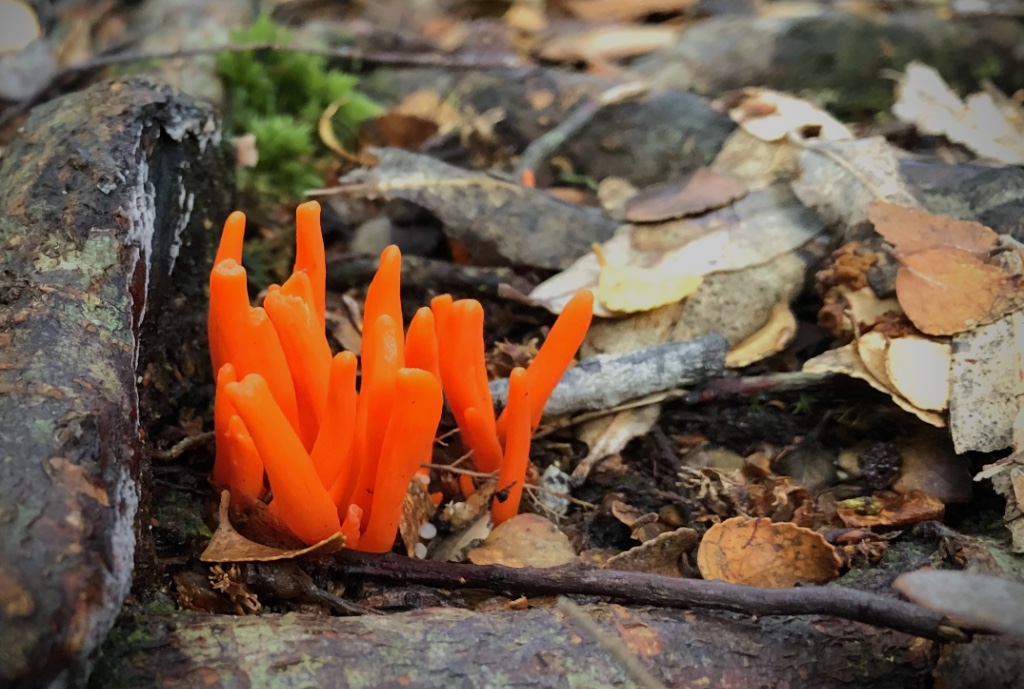
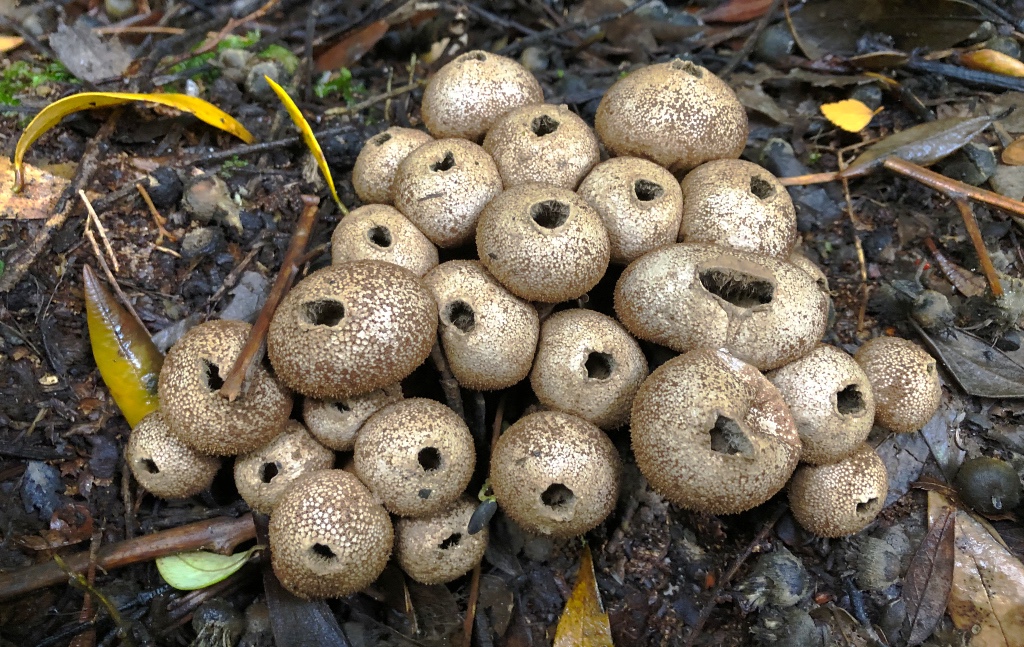
The trees along the walk are hanging with old man’s beard and there are a multitude of algae and parasitic ferns thriving on decaying branches. Also common during the autumn are a wide range of fungi, many brightly coloured and standing out among the fallen leaves and twigs and others such as puff balls arranged in small piles.
Further along the walk the ascent becomes steep and the parks Service have built a series of very sturdy but narrow steps. These aren’t for those unsteady on their feet or those with a fear of heights. Beware, there are no handrails on most of the steps on this walk. There were plans to add handrails but apparently the parks service had reached the limit of their budget.
At this point the track becomes harder to follow but if you look carefully you’re see some red markers to the left on a tree and subsequent white-topped posts beside several small depressions will guide you to an old downhill track to the car park. But not before one final series of exposed downward steps, which some may find challenging without a handrail.
Sumac Lookout
Our final stop in the Tarkine was at Sumac Lookout. You can’t miss it – there’s a very large ground level sign carved-out with a chainsaw. A small parking area leads to a short stroll to the lookout point high above the Arthur River and an amazing view it offers in all but heavy rain. We were lucky the showers had eased and the sun was trying to break through.

We had thoroughly enjoyed the day exploring this beautiful unspoilt region of northwest Tasmania, exceeding everything we had expected by a long margin. It had been a cold, blustery day but the weather just added to the atmosphere. This was the Tasmania we had really hoped to see and we were amply rewarded.
* A large part of the walk is among tree roots, which are a trip hazard as well as slippery when wet.
 Discovery Down Under
Great post, thanks Richard, along with a few amazing photos (my favourite was the first one of Cradle Mountain, just stunning). looks as though you’re having a fabulous, if not cool, adventure. We’re enjoying following your posts from the warm and wonderful sunny coast!
LikeLike
Thanks Kim! It’s certainly cool, we’re expecting snow overnight!
Cradle Mountain is a stunning and wild place, deserving of its World Heritage status.
LikeLike