Dip and the Big Tree

We’ve been experiencing some of Tasmania’s wild and windy weather over the past few days but that was not going to stop us exploring the northwest of Tasmania and all it has to offer those adventurous enough to brave the inclement weather.

Totally Wild

Today we headed 56km inland to see a big tree, actually The Big Tree, and Dip Falls both situated within the stunning Dip River Forest Reserve and the 450,000 hectares cool temperate rainforest known as the Tarkine. It’s a remote place and visually spectacular with large tree ferns and mosses lining the narrow road. It’s not hard to imagine dinosaurs still roaming around.

Upper Dip Falls

Sadly the signboard at Dip Falls had been vandalised by some idiot who must have thought it helpful to melt a hole in the perspex protective screen and fill it with gravel. Fortunately it’s very easy to see where the path leads and there are two choices. The easiest route to the falls crosses the road bridge where you can see the river disappear below, and a short level stroll to an observation platform overlooking the upper falls.

Lower Dip Falls

For the more adventurous, and sure footed, you can take the route into the forest direct from the car park and climb down the very well constructed staircase to the first platform, which gives a good view of the upper falls backed by gum trees partly obscured by drifting mist. Continuing further, the weaving steps drop to a platform extending over the Falls River with the most amazing view of the upper and lower falls as they cascade over the dark hexagonal basalt columns. It is worth every one of the 214-steps down and the same up to return to the car park.

An absolute must see during your visit to the northwest of Tasmania and all the better during the cool, damp weather as we visited.

Tasmania has some of the oldest forests in the world populated by some of the planet’s tallest trees.

Just a short drive from Dip Falls is the car park for the Big Tree. And there’s not just one big tree but many that you’ll find hard to miss right beside the car park. These majestic, Royal even, trees are of a species known as Eucalyptus regnans, from Latin meaning ‘to reign’ but more common known as Mountain Ash or a less inviting Swamp Gum.
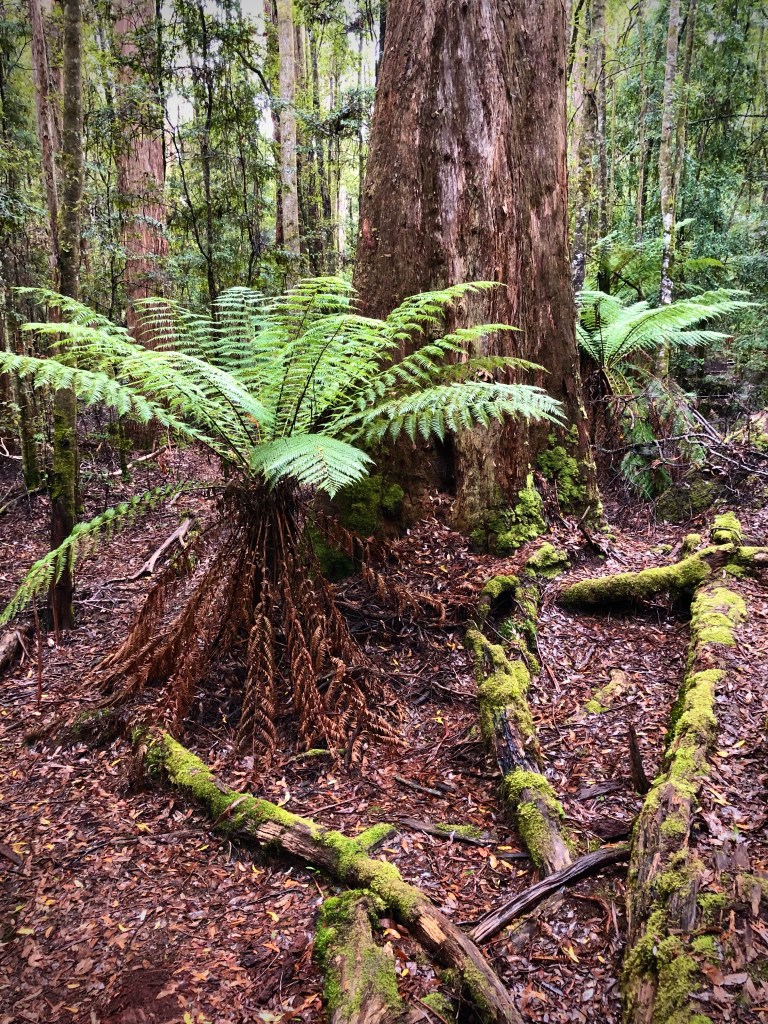
Tree ferns and Mountain Ash

Surrounded by tree ferns, mosses and lichen covered tree trunks, the short path leads past several impressive but smaller ‘Big Trees’ until it reaches The Big Tree. And it is big, very big! Standing almost 100-metres tall and a girth to match at nearly 17-metres. Sadly this 400-year old specimen is reaching the end of its life and is slowly decaying.

The Big Tree

A Fight for survival

How this stand of trees survived the relentless logging of the 19th and early 20th century is remarkable and owes its survival to its remoteness and difficulty of access. However that may change. Unbelievable 90% of the Tarkine is not protected and under real threat from logging, mining and damage by off-road vehicles. Worryingly the Tasmanian government sees the Tarkine as a resource to be exploited despite the region’s considerable Aboriginal heritage and being one of the last intact wilderness areas in the world.

The only way to guarantee these magnificent trees and the wilderness of the Tarkine survive intact is to get listed as a World Heritage Site – a process that an increasing voice is demanding.
A Special Treat

Stanley in the northwest of Tasmania is known not only for its well preserved historic colonial buildings or the rock mound known as the Nut, it is also home to a small fleet of bright red Crayfish boats.

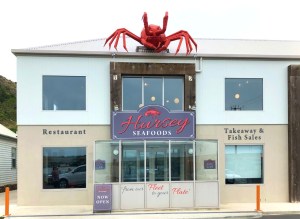
The fleet is the backbone of the Hursey family business, which supplies wholesale seafoods as well as fresh seafood for the Hursey restaurant, take-away and fish shop. Catches include Southern Rock Lobster (Crayfish), Giant Crab, Stripey Trumpeter, Gummy Shark, Flathead and other local reef fish. The crayfish are kept live in seawater tanks ensuring supply is available year round.

Hursey’s Restaurant – Stanley

Remembering a Tragedy

In 1974 James and Valerie Hursey moved to Stanley from Dover, southeast Tasmania. In 1987, to complement the growing fishing fleet, they built the commercial factory, takeaway and dining restaurant in memory of their son, Patrick, who was tragically lost at sea while attempting to rescue an adventurer rowing across Bass Strait. Today their restaurant stands on Wharf Street opposite the harbour where the Hursey’s crayfish boats can often be seen.

Crayfish (Southern Rock Lobster)

The Taste Test

You cannot come to this part of the world and not experience fresh crayfish, and we weren’t going to let this opportunity pass by. We had booked a table for the evening and were quickly served drinks while we decided on which of the cooking styles we would prefer; with garlic butter, saltbush butter, mornay or natural (cold) with seafood sauce. Having not tried saltbush before it was a brave decision but it was absolutely delicious even if we did have to wait an hour for our meals to be served. Just one slight issue, the restaurant had run out of potatoes to serve with the crayfish. Really? On an island that is a huge exporter of the vegetable? So, frozen french fries with veggies it was.

If you take the opportunity while in Stanley, as we did, remember the crayfish here are big. A half-large size would fill any hungry stomach.

The Stanley Nut

Moving on again we headed further west with our latest stop at the Crayfish town of Stanley.

Coffee, cake and a wee spell in a Vault

Always looking for a decent coffee we stopped on our way west in the small town of Wynyard, just off the Bass Highway. Known for Table Cape, a large and imposing flat-topped rocky outcrop that is crowned with a tulip farm. Surely a spectacular view in Spring. But we had heard of an interesting and quirky coffee shop fitted out within an old bank.

The Vault Cafe Bar

The Vault door

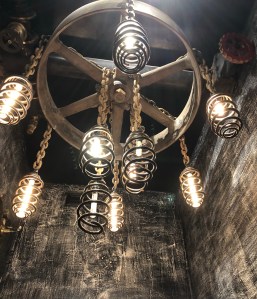
Situated on the corner of Goldie Street, The Vault Cafe Bar is certainly quirky but in a great way. Recently renovated the bar is a clever take on the original style of the bank with moulded cornices, exposed brickwork and quirky walls made from stacked books, all mixed with a hefty dose of Steam Punk. But the real highlight is the original bank vault complete with the heavy vault door, gears and locks but now a WC – yes a toilet! But the internal decoration goes one better. Not just styled in full Steam Punk guise but a floor laid with thousands of old pennies that glitter under the unique and dominating chandelier. It’s simply brilliant!

The Vault Loo

But first, coffee and we’re happy to say it’s good, really good. We had been looking forward to a coffee for much of the morning and hadn’t had much luck finding a cafe along the route from Devonport. Wynyard was the last settlement that was big enough for shops and a cafe or two before we reached Stanley. We hit pay dirt and whole heartedly recommend the Vault Cafe Bar whether just for an early morning caffeine hit, lunch or takeaway.

The Vault chandelier

Refreshed and caffeinated, we continued along the highway and turned-off to follow the road out towards the prominent circular rock known in more recent times as the Nut. Originally named Circular Head by British explorers George Bass and Mathew Flinders in 1798, its current nomenclature has been suggested as a shorter version of the Aboriginal name Moo-nut-ree-ker. We had reached the quaint historic beachside town of Stanley.

Hollywood Calling

Stanley is known for its well-preserved colonial buildings that line Church Street. Several of the original stores are still in use and retain the original external character. So much so, Stanley was selected as one of the locations for the 2016 film ‘The Light Between Oceans’.

Church Street History

Highly recommended is Providore 24 for everything from crusty sourdough bread, wines, pickles, cheeses, jams, sweets and locally made crafts to the perfect marinade for the BBQ. And for the best stop for an excellent breakfast, lunch or just a coffee and cake, try the Touchwood Cafe on Church Street. It was right here that we discovered the lightest, freshest, fluffiest, tastiest scones ever.

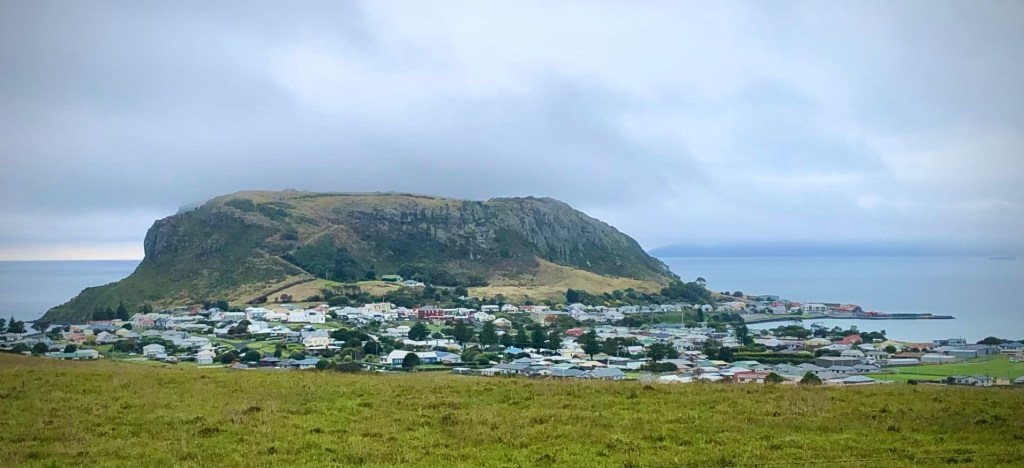
The Nut

Dominated by the volcanic plug, the Nut is a standout feature along the northwest coast. Once covered in trees the early settlers felled them and rolled over the edge to be used as firewood. Now a grass topped shelter for the resident population of shearwaters, also known as moon birds, that nest in underground burrows. Largely nocturnal during the breeding season, the shearwaters prefer moonless nights to help minimise predation – a wise choice when there are white-bellied sea eagles here.

The Nut

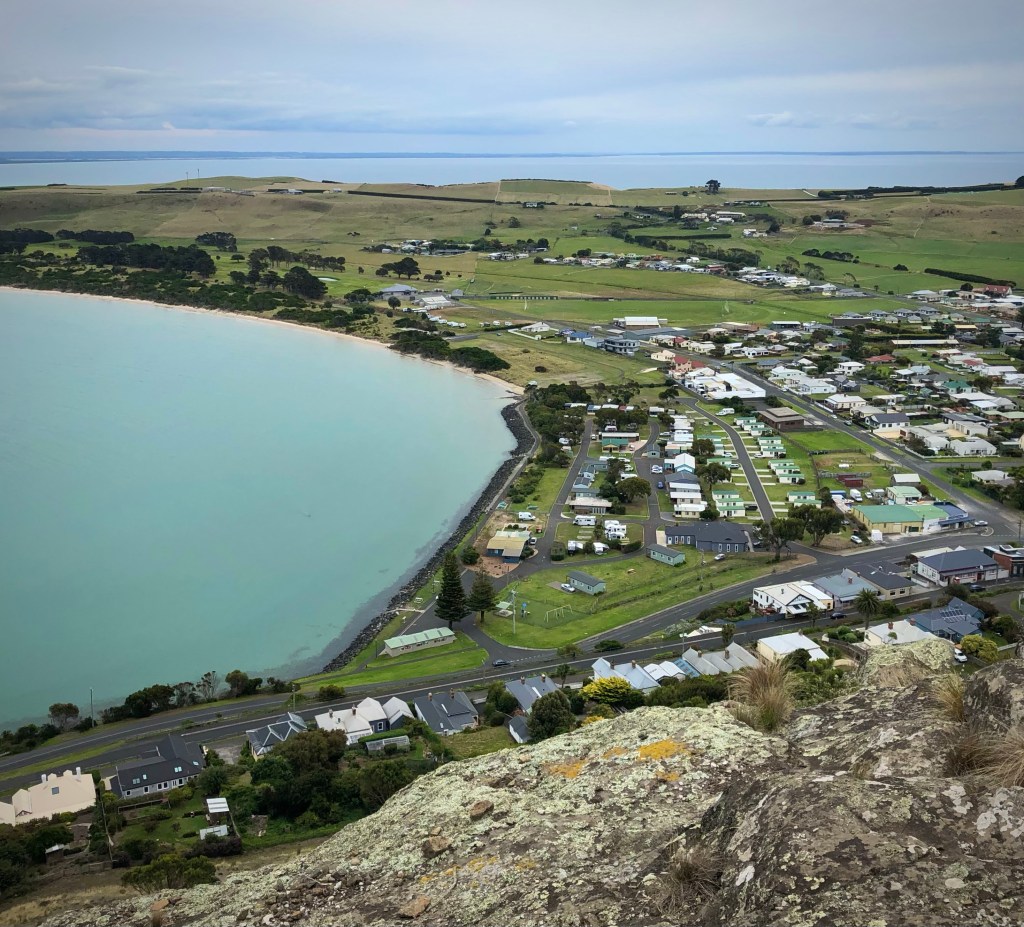
An ideal vantage point, the Nut provides a 360-degree view of the Bass Straight and Stanley town 159-metres below. A steep footpath can be taken to the top or the far easier cable car, which stops at the beginning of the 40-minute circular walk. The path makes for an easy walk on a solid panelled pavement but still requires suitable footwear. It is also quite exposed at the top so warm clothing or a wind proof jacket would be recommended.

Stanley from the Nut

Penguins!!

Those visiting Stanley and staying overnight are in for a treat. A couple of hours after the sun has set, Fairy Penguins come ashore to roost overnight in the shrubs that line the footpath behind Stanley Cabins and Tourist Park. If you don’t spot them at first you’ll certainly hear them! We saw many over the few nights we were in Stanley including two fluffy juveniles.

Letting off a little Steam

A short drive to the west of Devonport is Don Reserve, recommended to us by the enormously helpful staff of Devonport Visitor Information Centre.

The reserve borders the Don River and offers a peaceful environment to walk and lookout for the rare Swift Parrot. Stands of Black Gum, Swamp Paperbark and Coastal Black Peppermint trees provide shade during warmer days and home to many of the species of bird that seek protection here.

We started the walk along a path that seemed to disappear only to reappear a little further on beside a railway track and becoming a recently resurfaced tarmac path. In the background we could hear the whistle of a train, which we assumed was one of the trains servicing the docks in Devonport. However the whistle grew louder when all of a sudden we were being passed by a steam train! Curious we continued further and shortly after sighted the train again at the Don River Railway station.

Rock and Rolling

Having not experienced steam travel for many, many years, we bought tickets for the return trip to Coles Beach – the end of the line. We boarded what was once a women’s section of a coach that had been carefully restored.

Don River Railway Engine

It was a trip back in time to when train coaches were built by craftsmen from timber with a high gloss finish and brass fittings. Fortunately the seats were a little more comfortable than they would have been in the past and we were thankful for them as the train trundled along the very uneven track. Flying in severe turbulence could be considered more comfortable. However it was an experience we’ll remember, the steam, the smoke, the views of the Don River as the tide came in and the bruised behinds we’ll have for a few days.

We can imagine how busy the train would be during the summer tourist season but well worth any queue you would have to join. Any delays could be spent in the little rail museum or shop as you wait for your time to board.

Our circular walk continued on the opposite bank of the river through patches of paperbark and swamp grass before crossing Sawdust Bridge to rejoin the start of our walk. A large timber mill once stood beside the river leaving piles of sawdust from which the latest bridge crossing was named.

NB. Shortly after visiting the railway we heard bad news – a fire in the early morning of March 25th caused considerable damage. More…

Leven Canyon

Situated 56km southwest of Devonport is Leven Canyon Regional Reserve and home to the deepest limestone ravine in Tasmania – Leven Canyon.

The drive to Leven Canyon is just as captivating as the chasm itself following winding roads, through rolling hills and straddling forests beyond the motorway with Mount Roland dominating the view to the south.

On arrival we had been expecting something more developed for such a significant geological feature but we were greeted by a simple gravel parking area, good signage and a small display detailing the history of the reserve.

Two routes form part of a circular walk with two viewing decks giving clear views to the Leven River below. Joining the routes is a significant stairway comprised of 679-steps. Not for the faint hearted or those with less than average fitness, the steps are steep and winding.

Cruickshanks Lookout

We chose to follow the short upper walk first to Cruickshanks Lookout and what a great walk it was. Gentle at first interspersed with some steeper sections, the Cruickshanks Lookout walk passes through mixed woodland with plenty of shade but perhaps best walked early in the day in cooler weather as we did. The view from the lookout was worth every step to see the canyon from horizon to horizon while suspended 275-metres above the river.

View from Cruickshanks Lookout

Seeing the start of the steep downward stairway we decided to return by the same route to the car park before following the second path through Fern Glade.

Edge Lookout

The path to Edge Lookout begins relatively level as it passes among the tree ferns but soon begins to descend steeply on a slippery gravel path. In places a rope rail helps steady those with less than suitable footwear or weak knees. It is considerably tougher than the Cruickshanks walk on the joints but definitely the most rewarding walk from a fitness exercise perspective. The view from the overhanging platform doesn’t disappoint with an equally impressive view of the canyon below and a clear view to Cruickshanks lookout far above. Unfortunately reaching this point also means a tough walk back to the car park. Take it easy, enjoy the clear fresh air and use the slower pace to look for wild flowers and fungi growing among the undergrowth.