Following yesterday’s visit to the Warrumbungle Observatory, we are aiming for the high ground and a very special place in the Astronomical world, a place that puts Australia very much on the International stage. Today we are visiting the Siding Springs Observatory high on the edge of the Warrumbungle National Park.
Our short drive from Coonabarabran takes us past the Warrumbungle Observatory but then takes a narrow, winding road up into the peaks of the Warrumbungle mountain range to Mount Woorut. With amazing views through forests still recovering from a devastating fire in 2013, the blackened trees give a surreal view of the landscape but allow the underlying mountains to show their true shape and colour.
It is much cooler at this altitude and sadly the clouds rolled-in overnight spoiling the views from the summit. But we were here to see the observatory itself.
First stop was the cafe that serves an excellent coffee equally appreciated by TV’s Professor Brian Cox according to a note he left at the cafe. He’s made three visits so far so he must really like the coffee here.
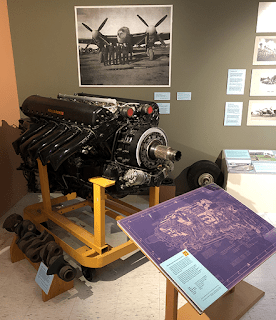
Joining the cafe is an exhibition space that details the history of the observatory, its very close ties with the UK, many of its discoveries and ongoing work helping to develop the next generation of large telescopes, the Giant Magellan Telescope due for completion in 2025.
Australia is a 10% partner in the 25-metre GMT project and is playing a major roll building two of the first-generation instruments as well as key components of the adaptive optics system. When completed it will provide the sharpest detailed images of any telescope, nearly 10-times better than Hubble and 3-times more detailed than the yet to be completed and launched James Web Telescope.

The Anglo-Australian Telescope
The largest telescope onsite is the 3.9-metre Anglo-Australian Telescope and currently the largest optical telescope in Australia. Among many discoveries the AAT has identified clouds near the surface of Venus, observed the explosion of a Supernova in the Large Magellanic Cloud in 1987 and measured the rate of the Universe’s expansion with unprecedented accuracy. This, in part, helped lead to the discovery of what is currently known as Dark Energy.
Just one of forty telescopes installed at Siding Springs, the AAT is joined by SkyMapper, a robotic telescope, which is creating a detailed survey of the southern sky and when complete will contain data on more than a billion stars and galaxies.
The Advanced Technology Telescope
The 2.3-metre Advanced Technology Telescope is used to study new objects discovered by SkyMapper in greater detail. This process allowed astronomers to identify the oldest known star in our Milky Way, believed to have been born shortly after the Big Bang approximately 13.7-billion years ago.
Siding Springs provides facilities for an International audience and hosts several instruments for other countries including the USA, Poland and Korea. One large rectangular building houses a group of remotely operated telescopes under a global system known as iTelescope.net, which allows both professional and amateur astronomers to remotely access the telescopes via the Internet, something we will have to give a try.

How many new discoveries will there be in years to come from instruments such as the Giant Magellan Telescope? Will we ever learn of life on another planet? Can we really be alone is this vast universe?
One thing we have learned over the past two days looking up at the sky, listening to the guides and viewing through the telescopes, is just how insignificant our little blue and white planet really is.





 Discovery Down Under