Following another long drive south on our homeward trek, we’ve reached the coastal town of Yeppoon. Sitting at the southern end of Farnborough Beach and enjoying views over the Coral Sea to the Keppel Islands, Yeppoon is both a popular beachside destination and a growing part of the commuter belt stretching 40KM northeast from Rockhampton – the unofficial capital of Central Queensland.
Familiar territory
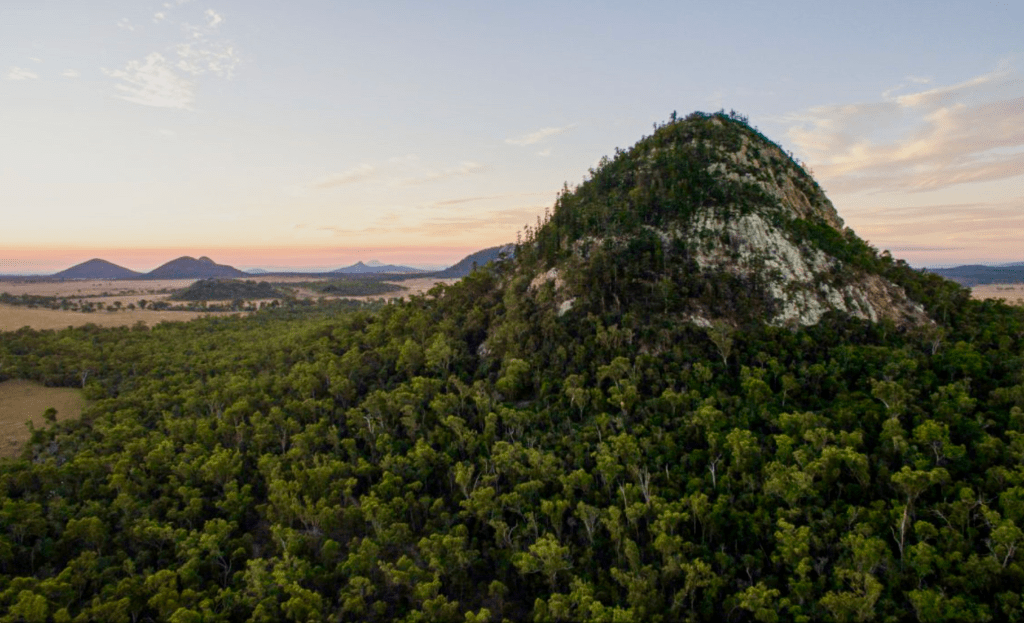
Yeppoon is a winding and undulating 35KM drive from the Bruce Highway and runs through what was once an active volcanic region. Enormous volcanic plugs, having survived tens of millions of years of weathering, rise high over the flat plain north of Baga National Park. Known collectively as the Mount Hedlow Trachyte they are reminiscent of the similar Glass House Mountains closer to home on the Sunshine Coast.
This is our second visit to Yeppoon after previously stopping here during our ‘Big Lap’ around Australia in 2019. Yeppoon is still growing as more families and retirees relocate from the southern states to enjoy the warmer climate of Queensland. And who can blame them?
Yeppoon – What’s in a name?
Australia isn’t short of strange place names and for that we can thank the early settlers of the 19th century. You see, the Aboriginal people of Australia have no written language relying instead on vocal and pictorial story telling passed along through countless generations. Indeed Aboriginal rock paintings predate the earliest known written language by tens of thousands of years.
Throughout Australia the indigenous people have many regional and tribal languages, all of which would have stumped even the most educated of early settlers. So, based on the Aboriginal spoken word, the Europeans interpreted and anglicised place names making them both readable and relatively easy to pronounce. Even then, for the early settlers at least, local places often took on a more descriptive name and Yeppoon was no exception being previously known as ‘Bald Hills’. It was a fitting name given the volcanic domes of Mount Hedlow Trachyte and the two trachtyte plugs that form Double Head overlooking Rosslyn Bay Harbour. It wasn’t until 1868 that Yeppoon received its present day name believed to be based on the local Darumbal Aboriginal word meaning ‘the place where the waters meet’.

Yeppoon is home to ten distinct beaches with Farnborough Beach being by far the largest at 17KM with long stretches of golden sand interspersed by rocky outcrops and views across the bay to the Keppel Islands – so named by Captain Cook while exploring the east coast of Australia in 1770.
Farnborough Beach, though, has quite a chequered past. In 1971 there was outrage when a Japanese syndicate under the leadership of Yohachiro Iwasaki, purchased thousands of hectares of beachfront land with the aim of building a coastal resort. Previous attempts to purchase the land by citizens of Australian had been blocked by the Queensland Government raising suspicions of corruption and backhanders. The land sale created an anti-Japanese campaign among locals and developers alike but the sale went ahead regardless of public opinion and objections. Local sentiment was so strong that on November 29th 1980 two men detonated a bomb at the resort coinciding with the day of the Queensland State elections. Comprised of sticks of gelignite, oil and petrol, the bomb caused an estimated A$1M in damage further delaying the opening of the resort. Both men were later aquitted. Originally known as the Iwasaki Resort, it was renamed the Capricorn International Resort and managed by Rydges until being taken over by the French owned Mercure Hotel group. In need of significant refurbishment it was abandoned in 2018.
Where is everyone… again?
Following a recent theme, even though this is supposedly peak season, the beaches are deserted and just awaiting the September school holidays. The sand is decidedly soft in places and not so easy to walk along following the turning tide. However, the receding tide has left behind thousands of tiny spiral shells each less than 15mm long. Known commonly as ‘screw shells’ or ‘tower shells’ or even Turritellas for the scientifically minded, they spend much of their life buried in sand on the ocean floor. Eventually, though, tides and storms deposit the empty shells onto the beaches along the Capricorn Coast.
Conveniently, there is a place to learn more about these molluscs and other marine and fossilised shells of the region. Situated in town at the Visitor Information Centre is Shell World Yeppoon with more than 20,000 shells on display from the tiniest to the giants of the sea.
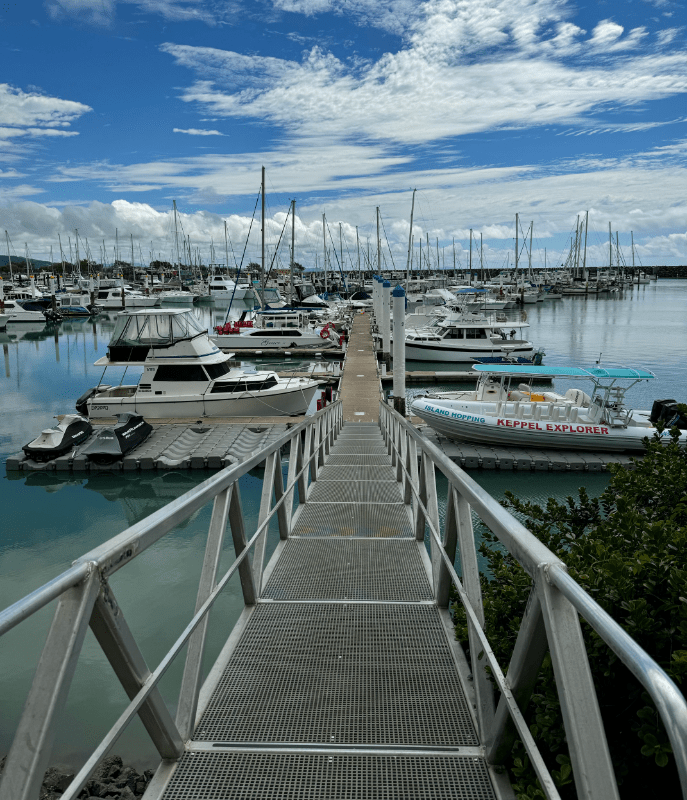
While wandering along the Rosslyn Bar harbour jetty I noticed something quite large stirring just below the surface of the water. What at first appeared to be a large fish became immediately recognisable as it turned toward us and started munching on the seaweed growing on the jetty. We’ve seen turtles on many occasions but this was by far the closest yet – just centimetres from where we stood. Fortunately it stayed around just long enough to grab a photo.

Freedom Fast Cats, based at Rosslyn Bay Harbour, run a regular ferry service to Great Keppel Island seven days a week – weather permitting. FFC also provide glass bottom boat tours to explore the coral reefs and adventure cruises among the islands.
Stingers
Between October and June it should be remembered that Yeppoon is still within the tropics and with that goes the annual ‘stinger’ season. The diminutive and highly venomous irukandji jellyfish, named after a northeastern Aboriginal tribe, measures only one to two centimetres in length but can have a devastating impact on your health should you be unfortunate to be stung by one. Known symptoms are intense shooting pains lasting upto 30-hours, extreme anxiety, brain haemorrhaging and fluid in the lungs. Potentially fatal, the irukandji jellyfish sting sends on average 50-100 people a year to hospital. There is no antivenin at present but applying vinegar to the affected skin can help minimise the pain. Wearing a stinger suite, similar to a Lycra wetsuit, will provide some protection if you really feel the need to swim in the sea during this time of year.
To entertain the little ones all year round, the Keppel Kraken waterpark straddles the foreshore situated among shady trees on Anzac Parade. And a safer place to swim during stinger season is Yeppoon Lagoon just a little further along the foreshore.
What is that?
Walking along Farnborough Beach we came across the most peculiar looking fish recently beached by the receding tide. Measuring about 500-600mm in length with a bulbous dull grey body and ferocious looking teeth, nether of us had a clue what it was. Despite researching we’re still none the wiser.

Cyclone Marcia
Still within cyclone territory, though less prone than Far North Queensland, Yeppoon felt the full force of category 5 Cyclone Marcia in February 2015. Over 60,000 homes in Yeppoon and neighbouring Rockhampton and Bundaberg were left without power with roofs torn off and walls collapsing leaving a repair bill estimated at A$750 million. Unusually Queensland and the Northern Territory were hit simultaneously by two cyclones, Marcia and Lam (NT) both making landfall within hours of each other.
Moving on
Getting closer to home, our final stop on this trip is Bargara and another 350KM drive south along the coast.
 Discovery Down Under