Beaconsfield Gold Mine, 40km north-west of Launceston in Tasmania, became the site of a global media frenzy when, at 9.26am on 25th of April 2006, a small earthquake triggered a rockfall 925-metres below the surface where 17 miners were working. It was a story of endurance, incredible bravery and tragedy.
Early Escape… for some
Of the 17-miners working underground on that day, fourteen managed to reach a safety chamber and ultimately made it to the surface without injury. However, for Brant Webb, Todd Russell and Larry Knight it was another story.
Larry was operating a Telehandler while Brant and Todd were in a 1.5 cubic metre steel cage on the front of the Telehandler’s extendible arm fixing a steel mesh to a barricade when the rockfall was triggered. The three men were trapped underground and their condition unknown leaving their families and work colleagues fearing the worst.
Unknown to the world above, both Brant and Todd had survived the collapse but were partly buried with rubble that had fallen through the mesh of their cage. They managed to free themselves within the cage by cutting through their clothing and boots that were wedged between rocks.

While rescue teams were working to discover if the mine was safe to enter, the two trapped men were able to collect water in their safety helmets that was seeping through the fallen rock. Other than water and a single muesli bar they had nothing to sustain them until rescuers could reach them.
The search for Survivors
After confirming the mine was now safe to renter, rescuers began the search for the missing men. They managed to reach within 15-metres of where they believed the men would have been prior to the rockfall but a large and potentially unstable debris pile blocked their way.
By the 26th of April a remotely-controlled earth mover had been brought in to begin removing the debris and early the following morning the body of telehandler driver, Larry Knight, was discovered having been pushed clear of the rear of the machine by the fall.
Progress came to a halt when further inspection showed it was unsafe to continue.
Action Plans
Rescuers, colleagues, mining experts, surveyors, medical staff and mine management worked through countless options to form a rescue plan to try and extract Brant and Todd from the mine whether they were alive or not.
Surveyors identified a potential route from the main access tunnel to a point just in front of the telehandler where they hoped they would find the remaining two miners. The rescue effort resumed on the 29th of April by blasting a new tunnel using at least six powerful explosive charges. Unknown to the rescuers the blasts were dislodging rocks, which were falling into the cage at times faster than Brant and Todd could clear them. With each blast Brant wrote the time and date on his overalls in the event they didn’t survive the explosions. Rescuers would at least know they had survived the initial rock fall but died as a result of one of the blasts during the rescue attempt.
Both men wrote letters on their clothing to their families in the event they didn’t survive and sang favourite songs to try and keep up moral.
They’re Alive!
At 5.45pm on April the 30th the Underground Manager, Pat Ball and Mine Foreman, Steve Saltmarsh descended to the level known as ‘925’ (925-metres below the surface) and, on approach to the rockfall, they yelled out in the hope they could be heard by the trapped miners. Both Brant and Todd immediately yelled back, “We’re in here!”. The pair were alive and news quickly reached the surface and the waiting families, friends, colleagues and media. Within minutes the news was heard on TV and radio around the world.
In the meantime one of the rescuers managed to find a way past the debris pile and got so close to the cage that he was able to reach through and shake hands with Brant. However, as an escape option, it would have required cutting the cage wires that were supporting the weight of the rock pile above the two men and the option was subsequently abandoned. Blasting was halted and instead a small, 90mm hole was chosen to reach the miners. Both Brant and Todd listened out for the drill to help guide it toward their location.
After successfully drilling through to the cage, a PVC pipe was fed through by which food and water could be passed to the men. A telephone was disassembled and passed through the pipe along with instructions on how to reassemble it. Later a torch, magazines, toothpaste and an iPod was fed to them via a modified plastic water bottle. A digital camera was also passed to the men so they could photograph their situation and the rock around them. Importantly this allowed the rescuers to ascertain the safest way to reach them without triggering further rockfalls.
A change of Plan
It wasn’t until The 1st of May that Brant and Todd were told about their colleague Larry Knight. On the same day the decision to continue blasting and drilling was stopped over fears of another collapse. Instead a machine known as a ‘raise borer’ was assembled, which it was hoped would be able to drill a horizontal tunnel one metre in diameter. It was designed to be used only vertically but it was thought to be the fastest option to get to the men and create a tunnel large enough for them to escape through. However, it would require bolting to a concrete base, which would take time to construct and allow the concrete to set.
In the evening of May the 3rd drilling of a pilot hole began, which ultimately took more than three days to bore through the remaining 12 metres of rock. Drilling was much slower than expected after hitting a form of quartz that was described as being five times harder than concrete. At 8pm the following day the drilling of the one metre wide escape tunnel began. It would follow the pilot hole to a point just below the trapped men.
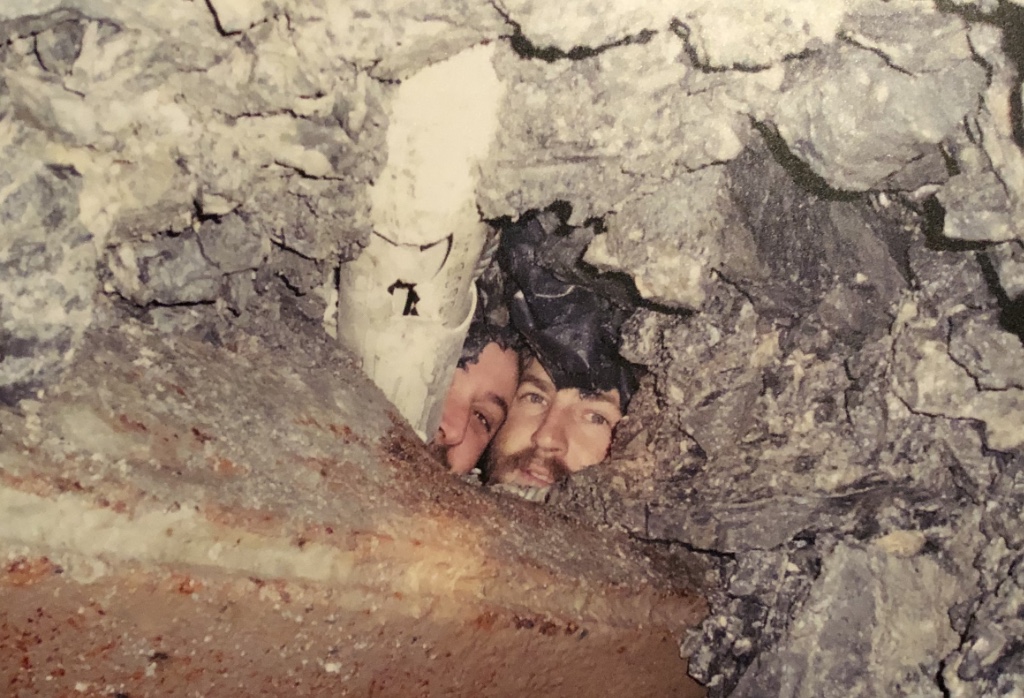
By early morning of the 6th of May the raise borer was 5-metres short of its target and took a further 12-hours to complete the escape tunnel. After disassembling and removing the borer the plan was for miners to lay on their backs and use hand tools to dig upwards to reach Brant and Tod. But the following day the rescuers hit extremely hard rock once again and their powered jack hammers were making no progress. Explosives expert, Darren Flanagan, fretted over the use of low-impact charges to break through the rock fearing it could trigger another rockfall and cause the cage to collapse. But there were no other options available and to the relief of all it was successful. At 9.30pm on May the 8th the rescuers were able to pass a probe through to the base of the cage – they were just one metre away from freeing Brant and Todd.
Breakthrough!
At 4.27am on the morning of the 9th of May, fourteen nights since the initial rockfall, rescuers Glenn Burns, Donovan Lightfoot and Royce Gill finally reached Brant and Todd, “I can see your light!” they yelled as they broke through into the cage, “ I can see your light too!” the miners replied.
Brant was the first to be pulled from the cage followed minutes later by Todd. After being checked over by a doctor, both men ascended the shaft’s lift and at 5.58am they walked out unaided to the cheers of the waiting crowd and the arms of their relieved families.

Both men were treated for their injuries at Launceston General Hospital and just six hours later both men were able to attend their lost colleague, Larry Knight’s delayed funeral.
Looking to the Future
Twelve months after the rescue the mine restarted production and continued operating until June 2012 by which time reduced gold prices and high operational costs made the mine unviable. However, plans are ongoing to reopen the mine with gold prices doubling since closure. This despite repeated theft and vandalism at the site with the most recent break-in causing an estimated $1.5M damage to the site’s infrastructure.
Beaconsfield Mine and Heritage Centre
In addition to the exhibition detailing the 2006 rescue, the Beaconsfield Mine and Heritage Centre contains over 10,000 items of machinery and household items from the days of steam through to the 1970’s. There’s something of interest for everyone and you’ll find yourself spending hours exploring the many displays and buildings.
For more information check the mine’s website: www.beaconsfieldheritage.com.au
 Discovery Down Under