Situated on the Northeast coast of Tasmania and stretching from Eddystone Point to Binalong Bay, the Bay of Fires is a stunning mix of turquoise water, powdery white beaches and orange tinted granite boulders.
Named by British Captain Tobias Furneaux* in 1773 after observing fires lit by aboriginal people along the coast. Furneaux’s ship, HMS Adventure, was sailing as part of Captain Cook’s second exploration of the pacific before becoming separated.
Bring on the Colour
The orange colour is caused by lichen** from the Hymeneliaceae family. It is a common occurrence on the granite rocks and boulders in the northeast of Tasmania, but is particularly vibrant within the Bay of Fires region.


Parking is limited along the Bay of Fires coastline with the largest parking area situated at The Gardens. There are small areas where you can pull-off the narrow road but we’d recommend getting there early.
For photography, the early morning and late evening light is best when the orange lichen appears to glow.
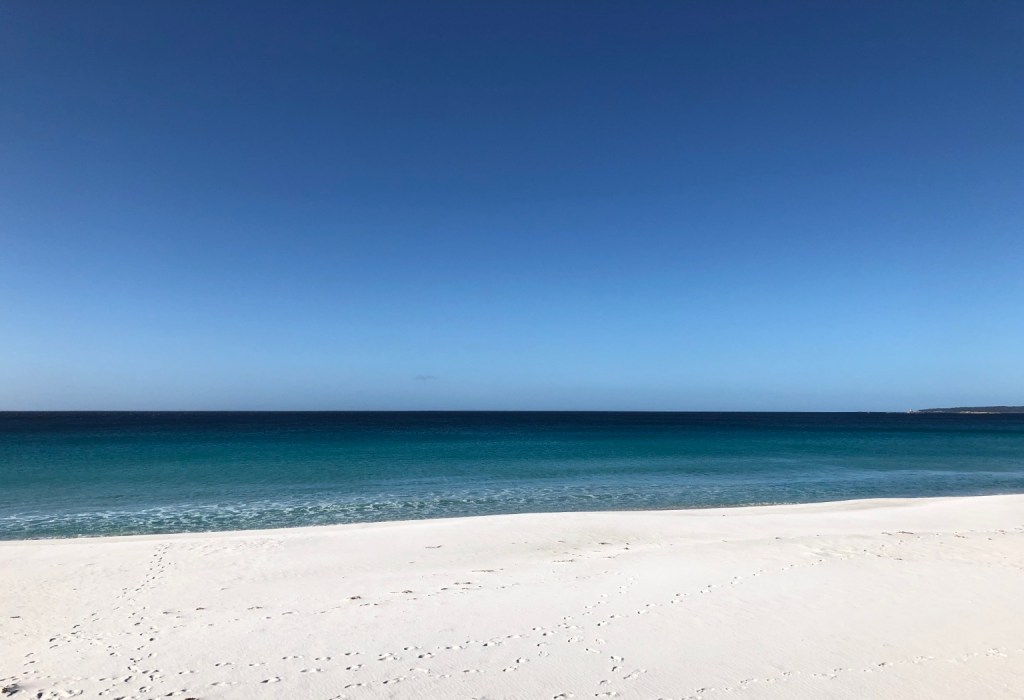
The powdery white beach between The Gardens and Binalong is perfect for a gentle walk. Humpback Whales can be spotted here from May to July as they head north to warmer waters and again between September and November when they return south to the Antarctic.

*Tobias Furneaux was one of the first men to circumnavigate the world in both directions.
** Lichens are a combination of algae and fungus that live in a symbiotic relationship. The algae gathers energy from the sun by photosynthesis providing food for the fungus, while the fungus creates a protective environment for the algae to thrive.
 Discovery Down Under