Western Tasmania isn’t short of waterfalls – the mountains and three metres of rain brought in each year from the Southern Ocean ensures that. But what we’re exploring today is something very special. It’s one of Australia’s best.
Our walk started from the deserted Montezuma Falls parking area accessed from Rosebery via the blacktop and dirt Williamsford Road. It’s a relatively easy 11.5km return walk, which follows the old Montezuma Silver Mining Company’s Northeast Dundas Tramway that once ran between Zeehan and the mine at Deep Lead (now known as Williamsford).
A World First
The train used on the tramway was of an unusual design known as a K Class Garrett. Named after its designer, Herbert William Garrett, the locomotive was articulated and divided into three interlinked units; the steam engine unit used to drive the wheels, the boiler/cab unit and the fuel/water unit. The advantage of this design was its ability to negotiate tight, twisting curves – a necessity among the terrain of western Tasmania. It is believed the Garrett design chosen for the tramway was the first of its type in the world having already been rejected by the government of New South Wales.
Signs of the Past
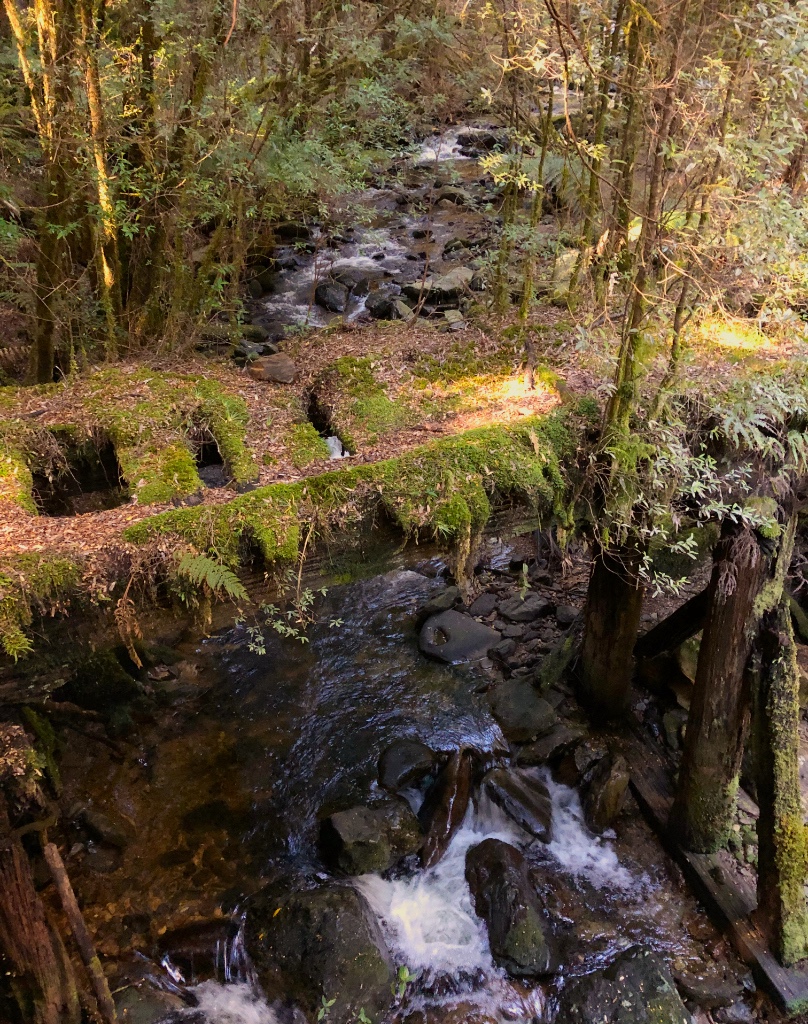
Glimpses of the old tramway are still very evident as you pass between moss and tree-lined cuttings blasted through rock and many timber sleepers exposed, some with hand made nails still in place. More impressive though are the original bridges that cross the streams and gullies. No longer safe to cross and sectioned off, the bridges are now home to many forms of moss, fungi and lichen with young trees even taking hold in the slowly decaying timbers.
Watch your Step
The track remains wet and muddy in places throughout the year and you’ll find yourself navigating across thoughtfully placed rocks and logs to avoid some of the worst spots. Though mostly level, the track requires sensible footwear and not the thongs that we witnessed several people wearing.

Thick rainforest hides much of the view of the Pieman River below, which is amazing considering the valley was heavily felled in the 1890’s. Now autumn, bright yellow and red Myrtle leaves litter the track like confetti among the many large tree ferns and moss covered leatherwood and sassafras trees. It’s for good reason the stunning, unspoilt scenery has made this a very popular walk.
A surprise Reveal
The highlight of the walk, of course, is the waterfall and although you can hear it in the background as you approach, its sudden appearance around a corner still comes as a surprise. Climbing a small observation deck just beyond the narrow suspension bridge and you get your first view of Montezuma Falls. But look upwards and there’s more. Crane your neck even further and the top of the 104-metre fall, Tasmania’s largest single drop, comes into view. It’s a surprising reveal and completely unexpected.

Without a frame of reference it is hard to portray the true size of the cascading fall. You really have to be there to witness it for yourself. To stand back a little further requires a walk across the suspension bridge. It’s not for those with a fear of heights or a platform that sways with every step. It’s a white knuckle crossing and a real test of those brave pants.
A hike to Montezuma Falls is absolutely recommended if you are ever in the area and a must if planning a trip around this spectacular island.
 Discovery Down Under