Situated 24KM south of Naracoorte, Bool Lagoon is a seasonal, internationally important wetland and home to a number of rare and endangered species of birds and amphibians.
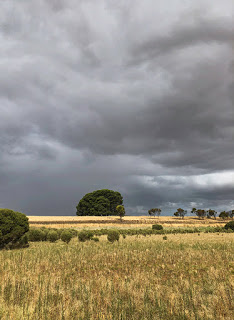
Seasonal it certainly is and best visited following the Winter rains in early Spring. When we visited in late January you could be forgiven for thinking that you were in the wrong place or someone had switched the road signs.
Not a drop of water visible anywhere and very few signs there ever had been, though the sky showed signs that rain was on the way. Instead a sea of yellow grasses, patches of paperbark trees and grass seed heads propelled by the strong wind across the road and settling in sheltered clumps like snow drifts. Even the barbed wire fences were covered with windswept grasses. Not quite what we had expected to see.
Wildlife
Following summer rains the lagoon normally fills with water attracting a wide variety of wildlife including the Southern Bell Frog – one of the largest in Australia, Brolgas, Pacific Black Duck, Great Egret, Swamp Harrier, Australian White Ibis, Straw-necked Ibis, Australian Shelduck, Black Swan, Grey Teal and the less common species such as the Black-backed Bittern, Plumed Whistling Duck, Cattle Egret, Spotted Harrier, Glossy Ibis, Sacred Kingfisher, Australian Pratincole. To date 198 individual species have been identified.

The Southern Bell Frog, known also as the Growling Grass Frog in South Australia, is in serious decline and considered endangered. It is already rare in New South Wales, vanished in the ACT and survives in just one population in South Australia – at Bool Lagoon.
Tea Tree Boardwalk
We braved intermittent showers and followed the raised Tea Tree Boardwalk across the wetland trying to imagine what it would be like if there was water – an impossible task. We spent more time, though, looking out for raised nails, bolts, screws and broken or missing planks on the boardwalk than at the scenery around us.
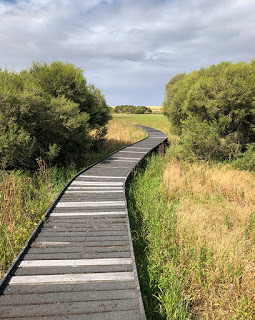
The 500-metre walk ends at a large bird hide overlooking what would normally be one of South Australia’s largest inland lagoons. A sign on the door to the hide asks visitors to ensure the door is kept closed to keep birds and bees out. Of course someone decided to ignore it and the hide is now home to several nesting Welcome Swallows.
Run down
There appears to be very little maintenance being carried out at the park, which is a noticeable theme we’re seeing across several of the South Australian National Park sites we have visited to date. It couldn’t contrast more with the excellent facilities the National Park Service in Western Australia provide. I guess the government of South Australia have different priorities and don’t have the mineral wealth of Australia’s largest state.
 Discovery Down Under