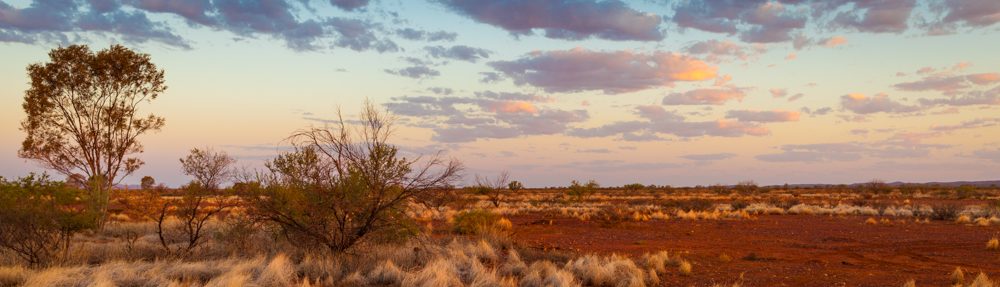
To some this is a road drive to tick-off the bucket list, an adventure, a necessity or something to fear. We’re crossing the Nullarbor towards South Australia over the next few days and, sadly, leaving Western Australia far behind.

No Trees
Literally translated from its Latin origin, Nullarbor means ‘without trees’ and while the Nullarbor Plain is sparse in any form of tall growth it is far from treeless. To most people the ‘Nullarbor’ is the road that extends 1,675KM (1,041-miles) from Norseman in Western Australia to Ceduna in South Australia. Located between the Great Australian Bight to the south and the Great Victoria Desert to the north, the Nullarbor Plain sits upon the largest known slab of limestone on the planet giving rise to spectacular cliffs where it meets the sea.
Apart from far more trees than we had expected to see we were also surprised at the steep drop the road takes down from the limestone escarpment at Mandura, the spectacular views over the dead-flat Nullarbor Plain and the climb back up the escarpment into Eucla with equally amazing views out to the sea.
Watch the Time
Crossing the Nullarbor also means a change of timezone – an unexpected one at that. In Australia we’re all familiar with the different timezones for our major cities across the country but how many were aware of the time change at Cocklebiddy? As you pass from West to East you need to move your clock/watch forwards by 45-minutes. At the same time you’ll be getting that much closer to the sun rising at a more reasonable time in the morning!
The unwary traveller may be alarmed to see aircraft landing on the highway. Being in such a remote part of the country several sections of the Eyre Highway are designated landing and take-off strips for the Royal Doctor Flying Service. Signs are posted close to each ‘runway’ but you must keep a lookout for any aircraft. Tuning to UHF channel 40 is recommended to listen out for any advisory calls from approaching aircraft intending to land or take-off.
Eyre Highway
More correctly known as the Eyre Highway – a two-lane sealed road, which happens to include Australia’s longest straight road, all 90-miles (145KM) of it, and one of the longest of its type in the world.

Adding to the list of over achievements of both natural and man made assets of the Nullarbor region we should include Rawlinna Station – the world’s largest sheep station covering an unimaginable 2.5-million acres. That is over 10,000 square Kilometres or 3,900 square miles.
Rawlinna Station is one of the locations that was showered with debris from NASA’s Skylab space station as it plummeted to earth in 1979. Being so large an area there is certainly more fallen debris to be discovered yet.
And while we’re at it let’s add one more world beater: The Nullarbor Links Golf Course – the longest in the world. Teeing-off in Ceduna, South Australia, the 18-hole Par 72 course runs through the entire length of the Nullarbor to Kalgoorlie in Western Australia 1,365KM away.
First Crossing
First sighted by Europeans in 1627, it wasn’t until two centuries later that a route crossing the Nullarbor was first successfully navigated overland by Edward John Eyre, from who the road takes its name. Described later as a ‘hideous anomaly, a blot on the face of nature, the sort of place one gets into in bad dreams’ it certainly portrays the nature and difficulty of crossing the Nullarbor.

Close to starvation and desperate thirst, the death of several of their horses by dehydration, the murder of one of the team by two of their Aboriginal guides along with the theft of their supplies, Eyre and his remaining Aboriginal guide, Wylie, managed to survive due to the chance sighting of a French whaling ship who’s crew provided them with food and water allowing them to complete the crossing in June 1841.
Rail Link
In 1917 construction of a Trans-Australia railway began. Part of the line between Port Augusta in South Australia and Kalgoorlie in Western Australia crosses the Nullarbor Plain, though much further north than the road following a more direct line. Two construction teams planned to start at opposite ends of the route meeting in the middle of the Nullarbor Plain at Ooldea. Ooldea’s saving grace from being in the middle of nowhere was its ample supply of water – essential for the then steam powered locomotives.
Crossing the Nullarbor by train was often a painfully slow process with delays caused by buckling rails resulting from the extreme desert heat and tracks sinking into soft sand. Ultimately the track became so poor and unreliable that a decision to rebuild the entire line was made as part of a project to standardise the country’s rail gauges.

Completed in 1969 with the first Nullarbor crossing taking place in February of the following year, the track now serves the famous Indian-Pacific train making regular crossings of the continent between Sydney and Perth via Adelaide.
And not forgetting our ever growing list of the world’s biggest and best, the Trans-Continental rail route includes the longest, straightest section of track in the world at 478KM (297-miles) right across the Nullarbor Plain.
First Road
1941 saw the first navigable route by vehicle being created across the Nullarbor. Though initially just a rough dirt track, the laying in sections of bitumen over the next 30-years made the route substantially more bearable with the final section being sealed in 1976. Today the road is in surprisingly good condition taking into account its remoteness and the number of Road Trains that pass along each day.

There are actually two roads that cross the Nullarbor the second being a dirt road known as the Transline Road running from Port Augusta in South Australia to Kalgoorlie in Western Australia. The poorly maintained road provides maintenance access to the railway as well as to remote sheep and cattle stations.
Communications
Long distance communications in 19th century Australia relied upon overland telegraph and with Eyre’s navigation across the Nullarbor it was shown a telegraph link between South and Western Australia was feasible. Two years of gruelling labour in tough desert conditions finally linked the capitals of both states in 1877 and remained in service for the next 50-years.
Maralinga
Between 1956 and 1963 the British Government, with the apparent naive assistance of the Australian Government, carried out a series of nuclear explosions in the Montebello Islands in northwest Western Australia as well as in South Australia at Emu Plains and around Maralinga, approximately half way along the Nullarbor and 160KM’s to the north of Yalata. It was believed to be the most suitable place in the Commonwealth to test Britain’s nuclear weapon ambitions.

You would not believe the arrogance and complacency of both the British and Australian Governments for the safety of the Aboriginal people on whose land these tests took place. At that time the indigenous people of this country were classed simply as Fauna and not human beings.
I’ll be posting a further article on Maralinga soon and believe me you’ll be astonished at what the British scientists did during the time of the tests and more recent times and, far worse, what they didn’t do when they left.
I would highly recommend the book Atomic Thunder – the real story of Maralinga by Elizabeth Tynan to learn just how atrocious these tests were and the arrogance of those involved. It is utterly shameful.
Penong
As we have previously mentioned many small towns have a knack of finding something unique about itself to attract passing travellers and the little township of Penong is no different, or rather, it really is unique. Penong is home to a large collection of windmills.

There are outback towns that display a small collection along the roadside, usually of varying age and condition and the Cobb & Co. Museum in Toowoomba, Queensland should be remembered for its impressive collection. But what makes Penong’s collection so unique is the large variety of windmills all of which have been carefully restored to working condition by the Windmill Warriors. One recently erected was discovered in a barn still in its original shipping package from 1967. That is the kind of find that Mike and Frank – the American Pickers, would have drooled over.
Another Record?

As we have been collecting various dimensional records throughout this trip across the Nullarbor, Penong has one more to add. ‘Bruce’ is the largest windmill in Australia with a whopping 10.7-metre diameter. It is capable of pumping over 1-million litres of water per day from as deep as 152-metres.
Set just back from the highway, the Penong Windmill Museum is a worthy stop for a photo opportunity and to stretch the weary legs. The Penong Cafe just around the corner is also recommended for a snack or coffee break – the friendly owner and staff will make you feel very welcome.
Ceduna
Officially the end of the Nullarbor road trip, Ceduna doesn’t have a huge amount to offer the passing traveller but it does have an excellent Visitor Centre and is very much worth paying a visit for details on the Eyre Peninsula and, if you are heading westward, information about the Nullarbor crossing.
If you are interested in objects from the past then Ceduna School House Museum operated by volunteers for the National Trust is a must. It has a few artefacts from Maralinga as well photographs taken during the bomb tests among its enormous collection of farm machinery, household items, cars, old radios, sheds and even a church. The museum is very much worth exploring for an insight into life in Australia during the early years of settlement. And for a collection of the unusual this museum cannot be beaten – how about a cavernous shed full of hundreds of sewing machines from past to present.

Stopovers
Our trip across the Nullarbor included overnight stops in Western Australia at Fraser Range Station, Cocklebiddy Roadhouse and Eucla. Then crossing the border into South Australia at Nullarbor Roadhouse and finally Ceduna making it a relatively easy four day crossing despite the strong crosswinds and the inevitable flies – not just on the windscreen but as soon as you step outside. These insects clearly know the human anatomy. You can bat them from one ear and they will fly around and try the other one. Then they’ll go for the eyes and sunnies are no protection, they’ll find their way behind them. But don’t take them off – as soon as you do you’ll hear them whistle their friends over and then it’s a full scale attack and they’ll surround you so you can’t escape. Try and get back to your car and they’ve got a gang already waiting to get in as soon as there is the slightest gap in the door. And just when you think you’ve beaten them and you’re 10KMs further down the road they’ll reappear and you’ll be swiping them away from the windscreen. As you drive along with your caravan it’s not your fellow oncoming travellers cheerily waving to you, they’re swatting the flies they let in at their last stop!
Fuel?
Both diesel and petrol is available at regular points along the route but, as always, fill-up whenever you can – it’s not unusual to find your next top-up is out of fuel or has lost power and unable to pump. It’s not worth the risk trying to save a few bucks for a cheaper roadhouse a couple of hundred kilometres further down the road.
A trip like this is full of surprises and one we hadn’t expected, as mentioned earlier, was the sudden decent at Madura that drops onto the Nullarbor Plain and giving dramatic views over a dead-flat terrain. The road continues along the plain with what is now a large escarpment to your left that disappears into the horizon.

Then at Eucla the road takes a sharp turn to the northeast and climbs up onto the escarpment again giving tremendous views across the plain, sand dunes and coastline. The Eucla Roadhouse is a good overnight stopping point to take in the view and see the night sky.
Roadkill
The Nullarbor may look barren but there is plenty of wildlife about of a size that can cause serious damage and possibly injury. You will see plenty of roos having a permanent sleep on the road usually identified in advance by a flock of crows or kites. Bones can easily cause punctures and any roadkill should be avoided as much as is possible. Watch out too for the many shingleback lizards that wander across the road this time of year and very slowly too.

Whoops, there goes the door
Our crossing of the Nullarbor wasn’t without issue. Thanks to some appalling lack of thought by Jayco during manufacture of our caravan the right side tunnel door was ripped off its hinges by the suction of a passing Road Train. Fortunately the safety strap prevented the door being completely removed and possibly hitting following vehicles. The door is secured with two latches but each latch makes only 2mm of contact with the door frame – totally inadequate. We’ve fixed the issue ourselves but will be in contact with Jayco… again.
We did it – we crossed the Nullarbor!
Well, we made it across. We hadn’t really known quite what to expect as far as scenery was concerned and it was better than we had imagined. There were far more trees, dead-straight roads, wildlife – including a Dingo, Road Trains, endless blue sky, sand dunes, dramatic cliffs, sheep stations, history, strong winds and good roads. Altogether the crossing was much easier and more relaxing than we had anticipated… despite the wind.
 Discovery Down Under