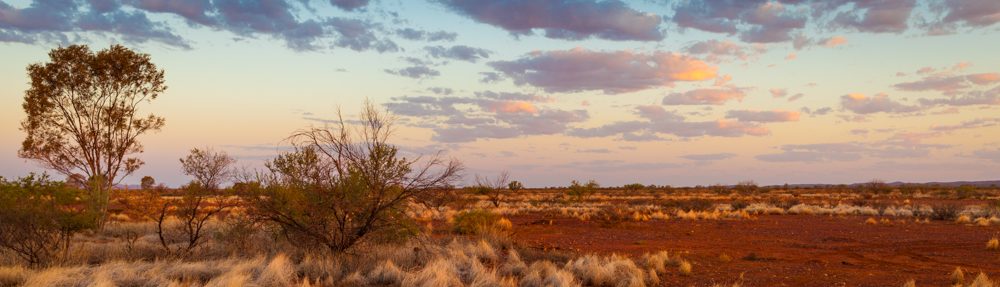
We timed the start of our trip around Australia to catch the Western Australia wildflower season as it progressed down the west coast from the Pilbara region in the north to Albany 2,300KM to the south. Low rainfall, unfortunately, has lead to a shorter, less colourful season this year.

Change of Plan
Small town Visitor Centres are great places to identify the best locations and current state of the wild flowers in their region. And it was based on the knowledge at the Geraldton Visitor Centre that we changed our plans. Rather than follow the popular routes where most of the flowering was over or beyond its best, we took a wider loop through the Mid-West Wheatbelt where the roadside bush was coming into bloom.

Heading from our recent stay at the coastal town of Geraldton out towards the country town of Mullewa and we were soon into wheat country. We were taking the so called ‘Everlasting Trail’ named after the paper daises that normally spread along the roadside.
A few small patches were still visible but mostly faded and withering. We were, however, greeted with many later flowering plants and shrubs ranging in colour from white through to yellow, blue and purple. But it was the cultivated fields that dominated.

Mid-West Wheatbelt
The Wheatbelt extends over 160,000 square kilometres and covers every metre of available space divided only by roads and narrow lines of trees. A few patches of scrub and woodland still stand showing how the region once looked before early settlers began clearing land for agricultural use.
Very noticeable are large, low-laying areas of salt where the salinity of the soil has risen as a result of change of land use through the introduction of annual, shallow rooted crops and increasingly low rainfall. The lack of rain has allowed the subsurface salt-laden water to propagate up to the surface where it quickly evaporates leaving the salt behind. Some blame climate change but most understand human activity – altering the biodiversity of ancient land – is the cause.

As has happened so many times on our trip, trying to take a photograph from the roadside is near impossible with no way to pull-over safely – especially with a caravan in tow. So, much to our surprise, we came across a huge lay-by, recently constructed, right next to several fields so I could take a photograph of a wheat field. And what did I find? Nothing but barley in all directions!!
Wattles
Between fields of wheat and barley the roadside is populated by a multitude of shrubs, bushes and Banksia trees. Many of the bushes and smaller trees are members of the Wattle family, which produce prodigious blooms of yellow/gold flowers throughout several seasons of the year. The wattle is a source of food for the Aboriginal people of Australia and increasingly adding to the kitchen of the western diet. The seeds from the wattle can be crushed to produce flour or added to cakes to impart a coffee flavour.
The yellow/gold flower and green leaf of the Wattle may be less known for something every Australian is familiar with – the national colours of Australia and the colours of the national sporting teams since being first introduced in England at the opening match of the 1899 Ashes series. Australia won by the way.
Enough with the Flies
Australia is well known for its flies but again this is partly due to human activity. Around the Wheatbelt region the flies are by far the worst we’ve experienced and the most persistent too. Even the strong wind doesn’t seem to deter them from creating as much annoyance as possible. And the reason for the flies? In a word – farming.

These insidious creatures go by the name of Musca vetustissima or more commonly the Australian Bush Fly. They lay their eggs in cattle dung and a single cow pat can produce 3,000 flies in just two-weeks. The average cow drops 10 to 12 pats each day and with in excess of 28-million cattle in the country it’s clear to see there is a fly problem – potentially 220-trillion irritating insects every year.
Things are so bad that efforts are underway to introduce dung beatles from Europe that quickly bury the cow pats returning nutrients back into the soil and capturing carbon in the process. Let’s hope, though, we don’t end up with another introduced species disaster like the Cane toad… or the Rabbit… or the Fox…

What plant is that?
So, our adventure inland didn’t produce the wide range of wild flowers we had been hoping for but we did at least see a few new species. All we have to do now is to try and identify them and as there are 12,000 species in Western Australia, 60% of which are unique in the world, it may take a while!
 Discovery Down Under