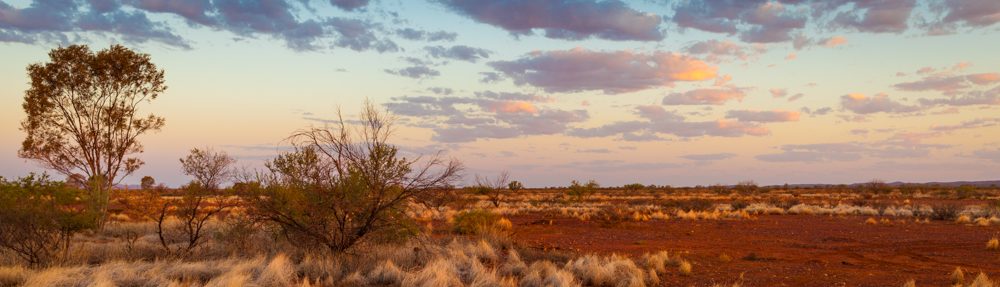

Towns in and around the Gem Fields have produced some interesting name signs displayed as you enter each town. Laser cut from COR-Ten steel and showing topical images for each location, it’s a nice change from the usual sign on a post.
Each town also has some form of unusual attraction for passing visitors. And Emerald has a particularly unusual one – the largest Vincent van Gogh Sunflowers painting in the southern hemisphere… and probably the largest easel too.
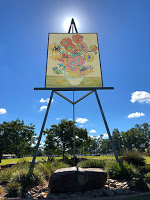
Located behind the Visitors Centre the 7 x 10 metre panel weighs 4.5-tonnes and requires an equally hefty easel to support it.
So why a van Gogh? Well, Emerald used to be a major grower of sunflowers and what better and well known sunflowers could there be?
Lake Maraboon
While at Emerald we have been staying at the Lake Maraboon Holiday Village. Not the easiest parking spot for us to access but the staff here know the sites well and without asking will guide you as you reverse park. Very helpful. We were right next to a small section of bush that leads directly down to the lake. Such a contrast to the past few nights with absolutely no noise other than from the wildlife and a few boats heading out on the lake for a day’s fishing.
Meet the Red Claw
Lake Maraboon is well stocked with fish but also has a local speciality – Red Claw. These are a form of fresh water crayfish often called yabbies and they thrive here. Of course we couldn’t leave Lake Maraboon behind without trying some Red Claw for ourselves in the form of the speciality pizza at the Holiday Village restaurant. And what does it taste like? Delicious!
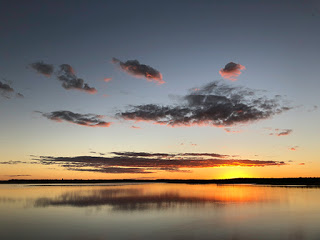
The lake forms the Fairbairn Dam, which is the second largest lake in Queensland, except right now it is in trouble. With very little rainfall during the summer the water level is now at its lowest since the dam was constructed in 1947. As a result wildflowers have grown on the banks that would otherwise be submerged by several metres of water. It is so low that the water no longer reaches the dam wall. By contrast, the floods of 2010/2011 saw the dam at 176% capacity resulting in a wall of water 5.5-metres high running over the spillways. The dam owners are currently taking advantage of the water level and performing some major repair work to the dam walls.
The lake also provides some great photo opportunities with many varieties of water birds both seasonal and local and ideally positioned for sunrise and sunset photographs. Unfortunately that also means contending with the flies and mosquitoes.
Heading West
Today is our last day in Central Queensland and we’ll be making our way further into the Queensland Outback towards the town of Barcaldine, which has its own very unusual attraction.
 Discovery Down Under